Background Landscape

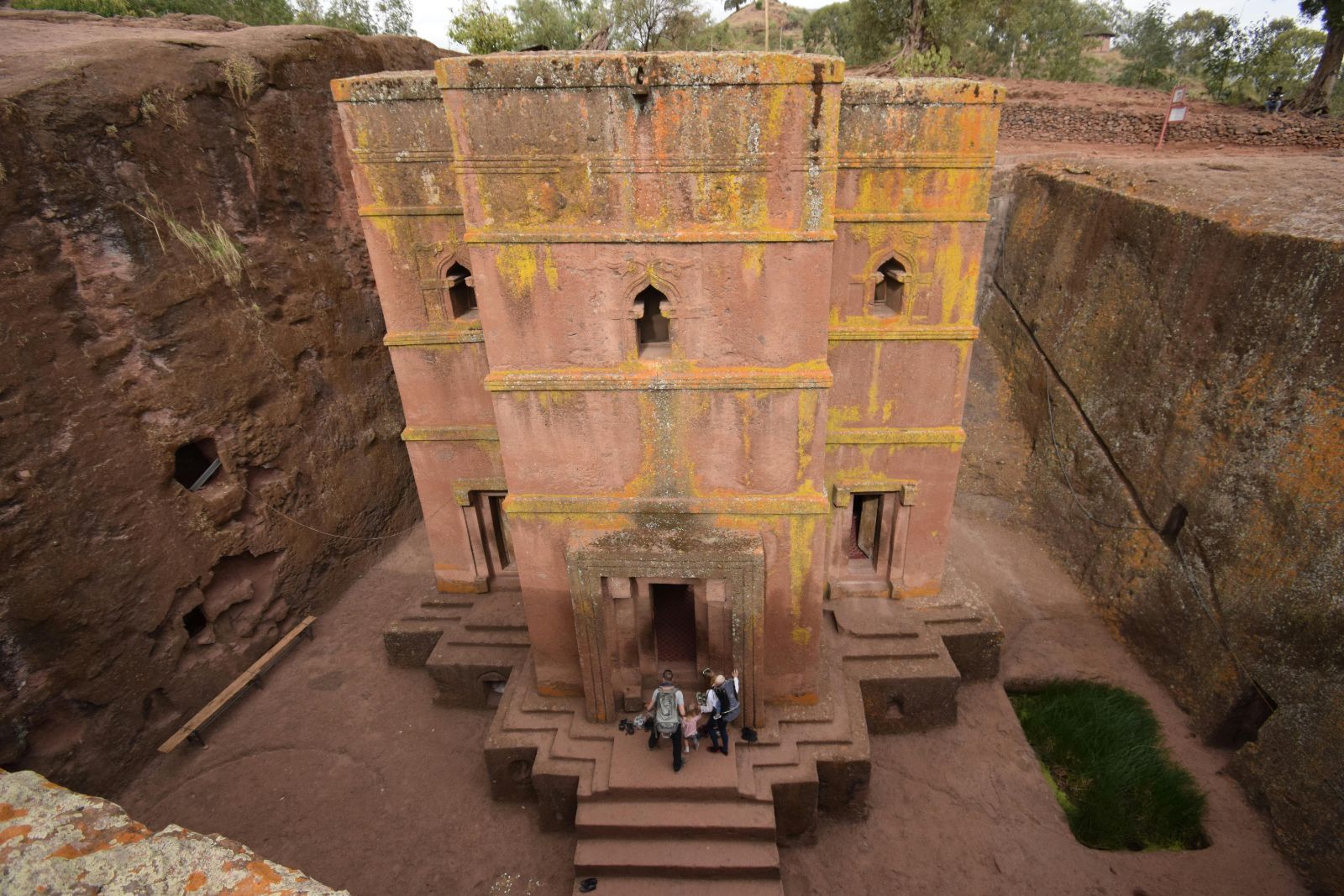
Ethiopian Highlands

The Revelation
of Christmas

The term Tewahedo (ተዋሕዶ) means “unity” or “oneness.” In its fullest sense, this does not refer only to theological unity (divine-human nature of Christ) but to a cosmological and epistemological principle: that all knowledge—spiritual, physical, mathematical, biological—is interconnected and reflects a divine order.

Theological Framework

Restoring the
Ancient Context.

Nile Valley Roots

The Ethiopian Tewahedo Church should be understood fundamentally as an African church with deep roots in the Nile Valley civilizations. It is not an appendage of Western Christendom but a sovereign spiritual entity.

Northeast African Milieu

While influenced by the Judeo-Christian tradition, it was decisively shaped by the cultural and spiritual milieu of Northeast Africa, integrating indigenous wisdom with revealed scripture.

Unbroken Preservation

This tradition has preserved early Christian teachings with minimal influence from later European theological developments, offering a window into a pre-imperial Christianity.

Divine Justice (Ma'at)

Levantine Context

If we recenter this conversation: Yeshua (Jesus) was a teacher whose message emerged from a Levantine/Northeast African cultural context. His teachings are a call to restore divine justice—a concept deeply resonant with Ma’at (Truth, Balance, Order).

The Opposition The Antichrist symbolizes systemic deception and oppression—the opposite of Ma’at (Isfet/Chaos).

The Restoration Christ’s return acts as a cosmic restoration of balance and truth, overcoming falsehood. This aligns with the Tewahedo emphasis on righteousness (ጽድቅ) and the Kemetic ideal of Ma’at.

"A return of Christ could indeed be interpreted as a collective awakening to truth and justice—a defeat of falsehood and restoration of cosmic order."

Historical Context

The Ethiopian Calendar:
The Kemetic Origin of Time.

01 / TAHSAS 29

The Timeless Date

Ethiopia celebrates Christmas on its own calendar date, Tahsas 29. While this date maps to January 7 on the Gregorian calendar, the celebration is not "on January 7th" from an Ethiopian perspective. It is on its own timeless date within an ancient and independent calendrical system that has never changed.

02 / THE MISNOMER

Refuting the "Julian" Label

Citing the "Julian" calendar is a means of using a name to imply European historical origin. The Ethiopian church did not "adopt" a Roman calendar; it inherited the liturgical computus (religious timekeeping) of the Patriarchate of Alexandria. Calling it "Julian" inadvertently centers the Roman imperial system over the authoritative African Christian source.

03 / THE ORIGIN

The Kemetic Foundation

The lineage extends beyond Alexandria to Ancient Kemet (Egypt). The 365-day solar calendar was created in Kemet by the 3rd millennium BCE. This Kemetic structure is the direct, physical ancestor of the Ge‘ez calendar. The "Alexandrian" calendar was merely a reformed version of this indigenous African science.

04 / THE LEGACY

African Intellectual Autonomy

When Aksum inherited the proper relgious time, it received a Christianized package built upon ancient Kemetic science. This reframes the narrative: an enduring scientific tradition passing from Kemet to Aksum. We restore agency to the originators, affirming an autonomous African intellectual lineage of the faith.

Sonic Heritage

Zema Chant:
The Oldest Christian Sound.

Long before the church was established in Europe, Saint Yared unified the sacred soundscape of the Christian Church. Zema is not a periphery to the Western canon; it is the surviving ancestor of the monophonic chant that would later be systematized in Rome as Gregorian chant.

The Critical Insight
Ockham’s Razor in a Biased History

The Crux of the Matter: The earliest Christian rites flourished in Egypt, Syria, and Ethiopia. These regions possessed developed, sophisticated chant traditions rooted in Jewish temple practices long before the West had a unified public church.

When Frankish reformers later sought to "purify" the Roman rite, they likely codified what had already drifted from the East. The simplest explanation—Ockham's Razor—suggests that the "Gregorian" tradition was an archival project of existing Afro-Asiatic forms, not a spontaneous European invention.

They systematized the sound; they did not birth it. Ethiopia holds the living memory of what came before the European codification. Moreover, this radically expands what we think of as African Religious music.

"The idea that rationality, order, and codification are uniquely Western achievements is itself a colonial construct."

— Saba Mahmood

This perspective shifts the center of gravity from Rome back to the Nile, where the liturgy was sung in African languages while Europe was still in formation.

Why no record in Western Manuscripts?

01 / IDEOLOGY

Imperial Erasure

The Carolingian project was ideological: To unify an empire under Rome, they erased African roots and emphasized Roman purity.

02 / MEDIUM

Oral Archives

Oral African traditions don’t survive in Western archives unless transcribed by outsiders, usually centuries later. Absence of evidence is not evidence of absence.

03 / PROTECTION

Guarded Knowledge

Knowledge was not always preserved in script—the Ethiopian debteras guarded their teachings cautiously, especially from foreign powers.

A New Conclusion

Gregorian chant is a late articulation of a sacred musical consciousness that Ethiopia helped preserve, refine, and transmit — across centuries, continents, and silence.

The Deep Grammar Zema in Ge'ez is the deep grammar of the early Church. It did not need to be copied to be the foundation; it provided the sonic soil from which later traditions grew.

Justice in Knowledge To recognize this is to perform an act of historical justice, acknowledging that the roots of the "western" sacred soundscape run deep into the African highlands.

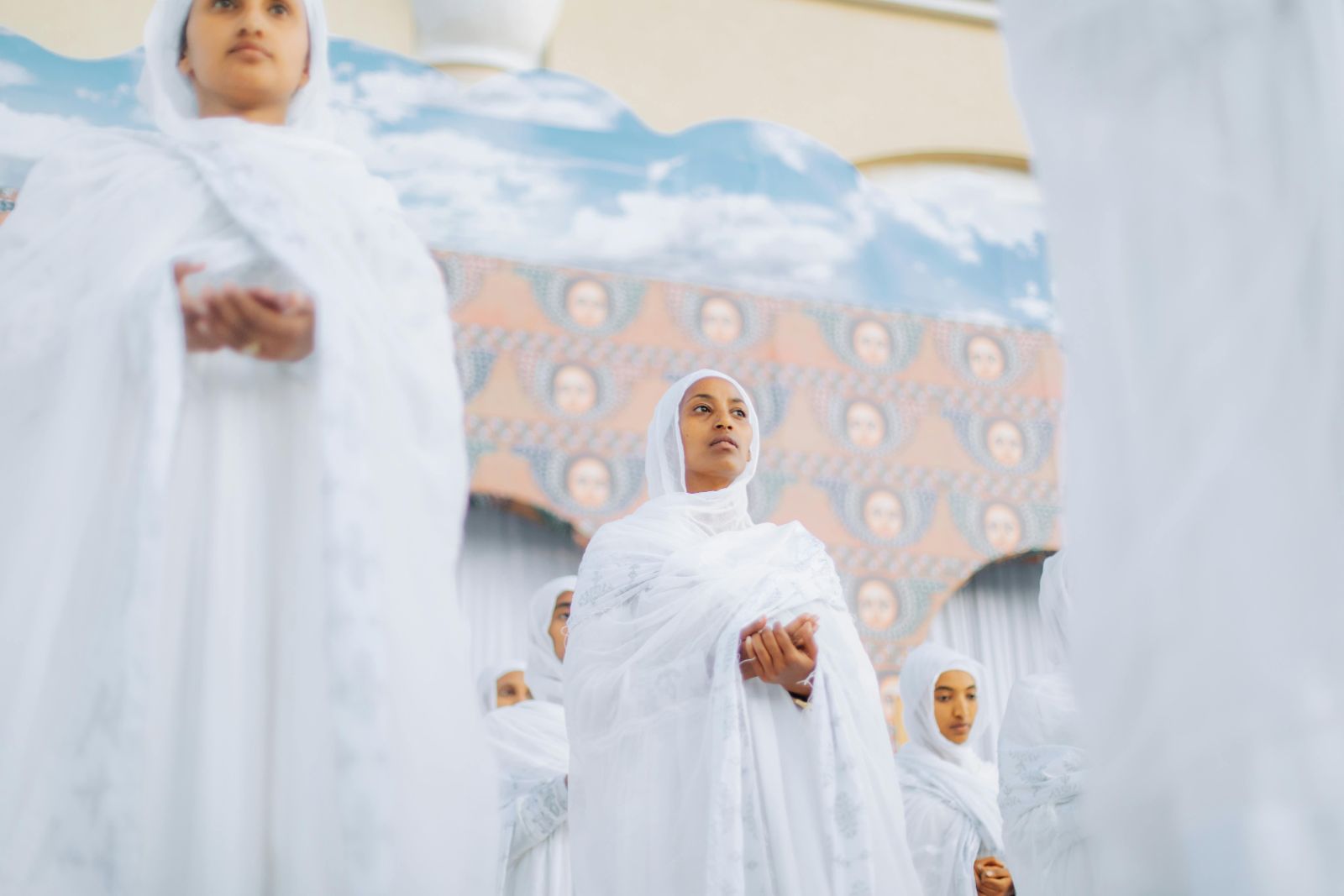
Zema Meditation Music by Aleon3
Sea
Play Film

It Begins

City
Play Film

The Call

Desert
Play Film

Breathe Again

Mountains
Play Film

The Return